
In late 2022, I started preparation for a caravan trip around Australia. I wanted to run an in-car fridge and was researching how to power it. At the time, I settled on a Bluetti AC200Max as a portable power station, giving me greater flexibility than a more expensive built-in battery solution.
I got a lot right and a lot wrong, but with new products such as the Bluetti alternator charger, I finally got my solution right. However, in a quest for more power and a whole bunch of new technology, it’s time to consider an upgrade and see if the new Bluetti Elite 300 is the right power supply.
Table of contents
- Why am I upgrading my portable power station?
- Bluetti Elite 300 features
- Specifications and price
- Comparing power stations
- Using the Bluetti Elite 300
- Who is the Bluetti Elite 300 for?
Why am I upgrading my portable power station?
When I bought a 2,000Wh (166Ah) portable power station, I thought that would be more than enough power. Along came Starlink, and the need for more power went up considerably. To overcome this, I added an expansion battery, which more than doubled my power and my weight (36kg increase). Weight is your enemy for long-range touring.
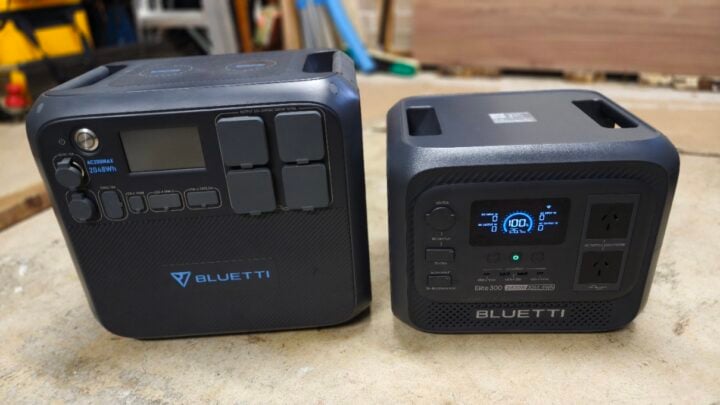
The next challenge I had was that although I could charge the AC200Max from 2 DC sources, solar and 12-volt cig power from the car, the cig power only provided 100W and was a very unreliable connection that came out and blew fuses constantly due to vibration. This was resolved with the Bluetti charger, which charged my power station in 3.5 hours, compared with 20 hours of driving, and has reliable connectors.
The AC200Max uses external AC and DC chargers, so I had a maze of extra boxes and cables, with more to go wrong. Older tech also meant there was no Wi-Fi connectivity or logging of performance metrics, such as solar input or usage. These shortfalls were never resolved, so I could not keep a close eye on what was going on, nor could I check on the battery system or get alerts when I was away from the car. My car has a mobile data Wi-Fi router, so I could have connected the Bluetti (new models support this) to the internet and then used my phone to control it remotely.
Bluetti Elite 300 features
The Bluetti Elite 300 portable power station is an all-in-one AC, DC, and USB solution that supplies up to 2,400W of power from a 3,014Wh battery. Through advances in battery technology, Bluetti has been able to fit a 3,000Wh battery into the case of a previous 2,000Wh product while matching its weight.
Bluetti uses LiFePO4 battery cells, coupled with protection circuits, making this a very safe power station. The battery life is quoted at 16 years if you recharge once every day.
Any standard household appliance you use at home can be powered by this unit, such as a hair dryer, a kettle, or a fridge. Note that the total power draw cannot exceed 2,400W. The exception is that you can enable a power-lifting mode that increases it to 4,800W for element-based products like a kettle, but definitely do not use this feature for computers.
During a blackout, the Elite 300 could power your home fridge for almost three days or your TV for 24 hours. You could charge a laptop more than 30 times and your smartphone almost 80 times. At camp, it would run a portable fridge for around four days and a coffee machine for three hours. On the job site, an electric saw would run continuously for 3 hours and a welder for about 1.5 hours.
Of course, running multiple items would reduce these times. The power station draws its power to run from its battery and will eventually drain it, even with no load, if left on. DC left on is the most efficient with a no-load standby time of three weeks.
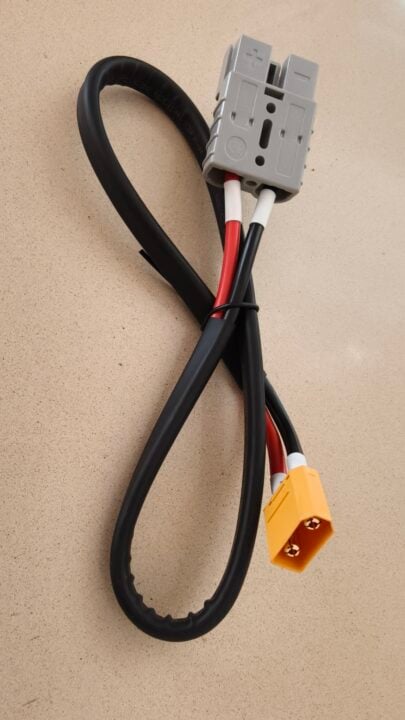
On the DC side, there is a 10A cigarette lighter socket and a 30A XT90 port. Four-wheel drivers will be happy to know Bluetti sell an XT90 to a 50A Anderson plug, which is the 12-volt standard for vehicle setups.
On the USB front, you get 2 × USB-A (15W each, 30 W total), 1 × USB-C (100W), and 1 × USB-C (140W), which is more than enough to power and charge your PC, your smartphone, and a drone.
Charging the power station is via a power point; if you set the Elite to turbo charging, it can be achieved in a couple of hours from empty. Alternatively, you can connect a DC source such as a solar panel or power from your car. Note: A 3,000 Wh battery is large and will take some time to charge, depending on how large your solar array is. An alternator charge will take five to six hours of driving.
The Elite 300 is portable, so you can use it in and out of the home, but it is not waterproof. Another use is as an Uninterruptible Power Supply (UPS), allowing you to connect critical medical or computer loads so that, in the event of a blackout, power remains uninterrupted. This switchover occurs in 10 milliseconds, which is super fast and means power will not be lost.
Bluetti Elite 300 specifications and price
| Power output | 2600W |
| Capacity | 3014Wh |
| Solar input | 1200W |
| Dimensions | 37 x 31 x 30 cm 26.3kg |
| Price (RRP) | $3,499 |
| Website | Bluetti Australia |
| Warranty | 5 years |
Comparing power stations
The standout feature of the Elite 300 is its size and weight. The Bluetti AC200Max weighs 28.1kg, whilst the Elite 300 weighs 26.3kg and has 1.5 times the capacity. During my trip around Australia, I carried 65 kg of Bluetti gear, which will now reduce to 30kg.
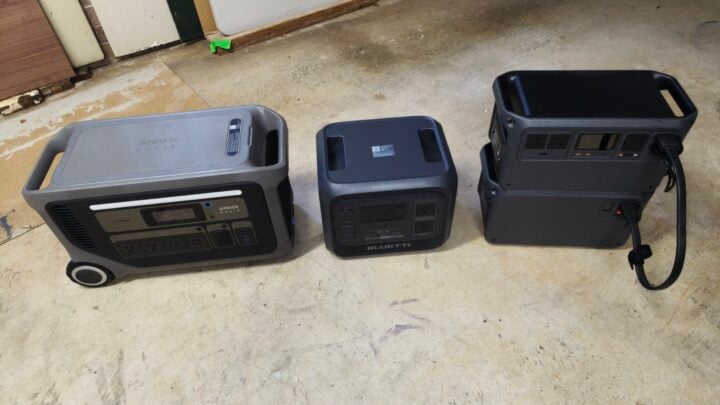
In this picture, you can see three power stations from different brands, each with a capacity of 3,000Wh. You can clearly see the size differences.
I did buy the AC200Max because it had a 30-amp 12-volt outlet with a connection that screwed onto the power station. Whilst not as reliable as a screw-on connection, the Elite also has a 12-volt, 30-amp output socket that should be reliable on bumpy roads.
Using the Bluetti Elite 300
My Bluetti AC200 Max was working well, but I wanted more power and less weight, and to be honest, the old power station had a lot of cables and extra boxes to make it all work. I am also testing the new Bluetti Charger 2, which I will review soon.
Without this alternator charger, I would not be upgrading the power station in my car. The Bluetti Charger 2 will replace the Bluetti Charger 1 in my car. Both allow fast charging directly from the car’s alternator to the power station, but the Charger 2 also allows connection to solar panels to charge the power station. The output from Charger 2 is MC4 plugs, the solar panel standard, which connect not only to Bluetti power stations but also to most other brands.
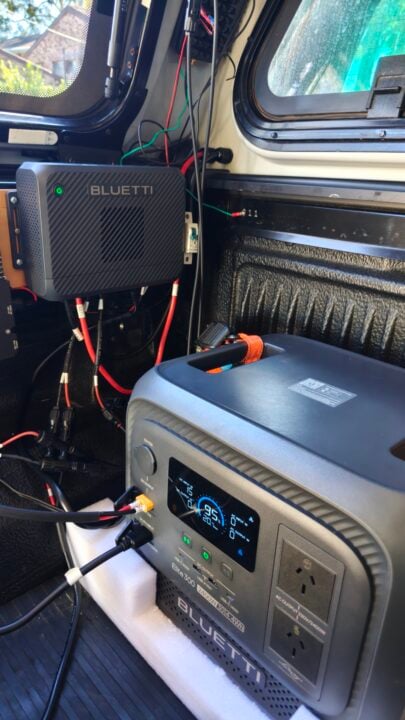
This power station is not expandable, but after running an expandable solution, I feel this will suit me unless I suddenly find some new, really power-hungry gadget.
I was originally running Starlink on AC power, consuming 100W per hour. If I wanted Starlink to run from 6 AM to 10 PM, that would be 1,600Wh. Previously, my measurement of this and the solar input to my Bluetti AC200Max was a bit of a guess, as there was no logging functionality. Now with the Elite 300, I can better manage my power usage hour by hour and understand how much solar or vehicle charging I get in a day.
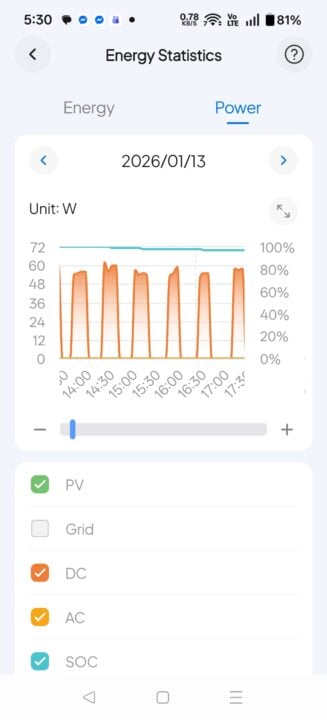
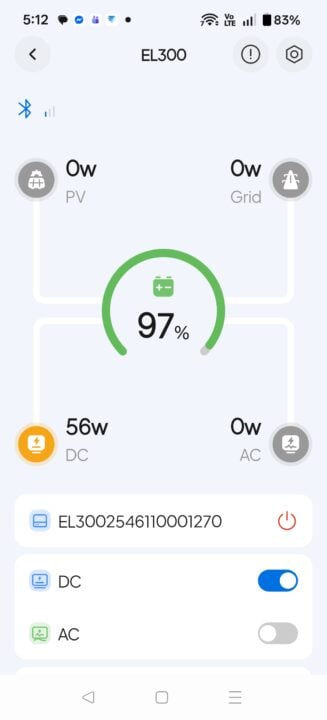
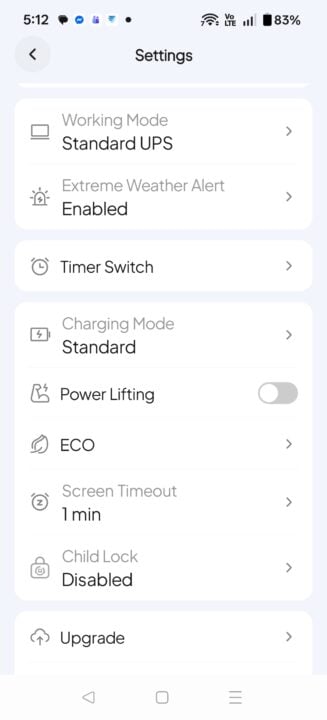
Continuing with the Starlink example, if it is the only load on either AC or DC, I can schedule power to be turned on or off automatically. For instance, I can schedule Starlink to turn off at night when I do not need internet, saving power. Measurements and scheduling are done through the app, and you can manually turn loads on or off. Say you are in your sleeping bag and do not want to get up, no problem, just switch off the power from your bed.
Who is the Bluetti Elite 300 for?
Bluetti makes a range of power stations, from small to large, some with expandability. The Bluetti Elite 300 is certainly not the biggest, but when I refer to it as a portable power station, at 26kg, anything heavier is really not portable.
The Elite 300 will run anything you can plug into a standard power outlet and will keep it running for some time. This is a great solution for a vehicle power supply, and you can also use it at home or on a job site the rest of the year.