

Sony has confirmed an Australian launch for the Alpha 7 V, four years after its previous-gen full-frame mirrorless camera.
Set for a mid-December release locally, the $4,699 camera sports many of the improvements you’d expect from a generation upgrade. These range from faster processing times and autofocusing to an improved sensor.
One of Sony’s headline changes with the Alpha 7 V is the new 33MP Exmor RS CMOS sensor. Described as “partially stacked”, it’s a relatively new type of design that refers to how the circuitry interacts with the sensor. In basic terms, a partially stacked sensor is faster at processing than a non-stacked sensor, which helps with continuous shooting, autofocus, and so on.
According to Sony, the new camera has a roughly 4.5 times faster readout speed compared to the Alpha 7 IV. In other words, the fifth-gen camera can read and process image data from the sensor more quickly.
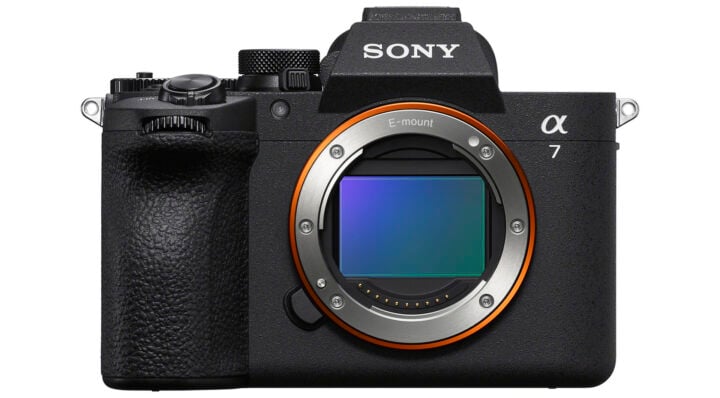
On the topic of autofocus, Sony claims the Alpha 7 V has a 30 per cent improved performance at tracking subjects in real-time. It’s not clear if that 30 per cent refers to the speed at which the camera locks onto a subject, how accurately it focuses, or a combination of the two. Regardless, the camera is meant to be good at retaining focus on moving subjects, like athletes, kids running around, or animals.
Similar to Canon’s recent cameras, like the EOS R6 Mark III, the Alpha 7 V has a pre-shoot feature that helps capture moments if you’re a fraction too slow on the shutter. Sony’s version of the feature captures up to a second before a shutter press, compared to Canon’s half-second.
Sony’s camera also gets more 4K video modes, including a 7K oversampled 4K 60fps setting when shooting in full-frame. Meanwhile, a 4K 120fps setting is available in the cropped APS-C mode.
Joining the camera in January next year is Sony’s FE 28-70mm F3.5-5.6 OSS II lens, which is designed to take advantage of the new Alpha’s more powerful processor.