
For most of its history, using Adobe’s creative tools meant opening an Adobe app. At Adobe MAX 2026 in Miami Beach, the company made it clear that is changing.
Alongside a long list of new AI features for Firefly, Premiere and Photoshop, Adobe announced partnerships and integrations that put its technology inside other platforms, including AI assistants such as ChatGPT, Gemini and Claude, Google Workspace and Microsoft Windows.
Adobe CTO Ely Greenfield, who also runs Creative Cloud and Firefly, described the shift at a press briefing as “the disaggregation of creative technology and creative process”. Ten or 15 years ago, he said, removing the background from an image meant opening Photoshop. Now, with the rise of AI agents, the idea is that “creation can happen anywhere and that customers are free to combine different technologies and tools to create the workflows that they want.”
Adobe inside ChatGPT, Gemini and Claude
The most visible part of this is Adobe’s connectors for AI assistants. Adobe already offers connectors in ChatGPT, Gemini and Claude that let you call on a set of Adobe tools from within a chat, and says that list will keep growing.
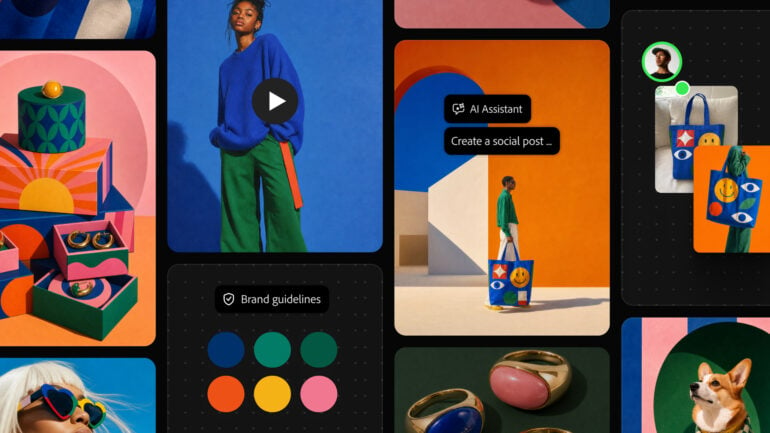
Deepa Subramaniam, Adobe’s vice president of product marketing for Creative Cloud, described the connector as “a subset of tools and technologies that you can invoke within the LLM directly to start your creative process”. From there, you can move into Adobe’s own apps, where the same Adobe Creative Agent powers new AI Assistants in Firefly, Premiere, Photoshop and Illustrator. These are in beta, and Photoshop’s is currently only in the Photoshop beta app.
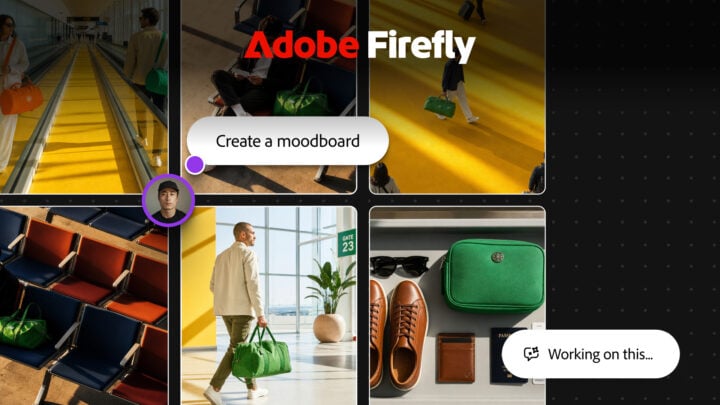
The next step goes further. Adobe previewed local MCP (Model Context Protocol) integrations that will let professionals use their preferred third-party AI agent to work directly in native Photoshop, Illustrator, Premiere and After Effects project files on their own computer. Adobe says layers, vectors, bins and sequences stay editable, so you can step in and adjust the work by hand at any point. The integrations are due in private beta in early 2027.
“MCP is just one more way to support creatives where they’re at, how they want to work,” Subramaniam said. Greenfield expects most people to connect through the big public AI assistants such as ChatGPT, Gemini and Claude, which he described as becoming hubs for all sorts of workflows.
How much of Premiere will an AI agent get?
At the briefing, GadgetGuy asked Greenfield how capable those MCP connections will be. Will an outside agent such as Claude get access to the full Premiere toolset, or only a limited subset? And how does that compare with Adobe’s own Creative Agent?
Greenfield said he couldn’t give absolutes yet because the work is still in development, but that the intent is to open up whatever customers need. “Does that mean every single thing in our tools is available? I don’t want to make it absolute like that,” he said.
On how Adobe’s own agent compares, he drew a parallel with Firefly’s AI models: Adobe builds its own to fill the gaps that general-purpose options leave. For creative agents, that gap is judgment. Earlier in the session, Greenfield described working out whether a piece of creative content is any good as “a very hard task, which most humans aren’t good at”, and the part Adobe is investing in to make its agents smarter.
Topaz Labs joins Adobe
Adobe is also bringing more AI models under one roof. Topaz Labs, known for its AI image and video enhancement tools and now owned by Adobe, has introduced two new image models. Wonder 4 combines upscaling, denoising, deblurring and sharpening in a single click, while Image HDR uses AI to convert standard images to HDR. Topaz sits alongside Adobe’s own models and those from partners including Google, OpenAI, ByteDance, Kling and ElevenLabs in Firefly, although Adobe says the Topaz models are available to purchase separately.
Why Adobe is opening up
It is a notable shift for a company whose business has long depended on people opening its apps. Asked how the announcements help Adobe stay relevant against rivals such as Canva, Greenfield argued that a lot of AI-generated content still ends up in Adobe’s tools for finishing, and that unbundling its technology is about making sure “there’s no barrier to people using our technology where they want to.”
For creators, the practical upshot is choice. If you already work in ChatGPT, Gemini or Claude, Adobe wants to meet you there. If you know Premiere or Photoshop inside out, they are not going anywhere. How much of Adobe’s toolset outside agents will actually reach, and what it will cost, are the questions still to be answered.
What’s available now and what’s coming
- Available now: Adobe connectors in ChatGPT, Gemini and Claude
- Available now: optimised Photoshop, Premiere and After Effects for Arm-based Windows PCs, with Substance 3D Painter in beta
- Coming: Adobe Express in Microsoft Photos, starting with a Windows Insider preview
- Coming: Acrobat in Gmail and Google Drive, and Adobe tools in AI Mode in Google Search
- Coming: local MCP integrations for Photoshop, Illustrator, Premiere and After Effects, in private beta from early 2027
Adobe hasn’t detailed Australian pricing or availability for the upcoming integrations.
Valens Quinn attended Adobe MAX 2026 in Miami Beach as a guest of Adobe.